

∞
Psychedelic-Assisted Therapy in Hamilton
When it feels like you've tried everything, it can be hard to know where to turn next.
✓ Health Canada Compliant Medical Care
✓ No Referral Required ✓ Dedicated Medical & Therapy Team
✓ Free Information Call Does this sound familiar?
You've tried therapy but still feel stuck.
Medications have helped somewhat—but not enough.
You're exhausted from carrying anxiety, depression, trauma, or grief.
You're functioning on the outside while struggling on the inside.
You know there's more healing available—you just don't know what that looks like.
You're curious about ketamine therapy but have questions, hesitation, or even fear.
Imagine...
...feeling lighter.
...less trapped by old patterns.
...more connected to yourself.
...able to approach difficult experiences with greater compassion.
...finding hope again after feeling stuck for a long time.
But how?
Ketamine isn't the therapy.
It's one part of a carefully supported therapeutic process.
Medicine may create a temporary state where the mind becomes more open and flexible. Therapy helps you understand, integrate, and carry those insights into everyday life.
Rather than simply reducing symptoms, our work focuses on understanding the experiences, beliefs, and patterns that have kept you feeling stuck—and helping you create lasting change from there.
But, there are no guarantees. Reach out and we’ll chat about this treatment option and if it’s right for you.
What makes a good candidate?
~ You've engaged in therapy but still feel stuck.
~ You're looking for more than symptom management.
~ You're willing to actively participate in preparation and integration.
~ You're open to approaching healing with curiosity.
~ You're medically appropriate after assessment.
We’re Supported by ATMA CENA
At Access Therapy, our psychedelic-assisted therapy (PaT) services are supported by ATMA CENA.
As part of their national network of clinics, we’re able to offer access to this emerging field of care in Canada with a strong foundation behind us.
ATMA CENA provides established clinical protocols, operational systems, and specialized training for therapists, helping ensure that our PaT services in Hamilton are delivered safely, ethically, legally and with consistency.

Is PaT Right for You?
You may be drawn to psychedelic-assisted therapy if you've done meaningful work on yourself but still feel like something isn't shifting.
Many people come to PaT after years of therapy, personal growth, or self-reflection. They often describe feeling stuck in the same emotional patterns, disconnected from themselves, or frustrated that insight alone hasn't created the change they're looking for.
You may be drawn to PaT if:
• You understand your patterns but continue to feel trapped by them
• Traditional therapy has helped, but you feel you've reached a plateau
• You feel disconnected from your emotions or inner experience
• You long for a deeper sense of healing, clarity, or self-understanding
• You're curious about a research-informed approach that works differently than talk therapy alone
“Psychedelic-assisted therapy isn’t about escaping difficult experiences.
It’s about creating the conditions to meet them differently—with greater openness, perspective, and support.”

What PaT May Support
Research has explored ketamine-assisted therapy for:
Depression, including treatment-resistant depression
OCD, anxiety, and panic-related symptoms
Trauma and PTSD
Other ongoing mental health concerns
PaT is not appropriate for everyone. That’s why we begin with thoughtful screening, preparation, and clinical support to make sure this approach is safe, appropriate, and aligned for you.
Why Access Therapy?
We didn't rush into offering psychedelic-assisted therapy, and we’re not doing it because it’s trendy.
We believe in it’s potential.
Our team spent years exploring the field and how psychedelics support healing, pursuing specialized training, developing clinical protocols, and carefully designing a program that prioritizes safety, preparation, integration, and exceptional support.
We also believe this work is best held by clinicians who understand its depth. Alongside extensive professional training, our team brings personal experience with altered states of consciousness and the transformative potential they can hold.
This is powerful work.
We approach it with humility, care, and deep respect for the trust our clients place in us.
Wondering if this could be the right next step for you?
We’re here to help you explore that gently and thoughtfully. If you’re curious about PaT, we can talk through your questions, your hopes, and whether this approach feels like a good fit for you.

Why a Structured Process Matters
Many people notice a shift after one ketamine session. However, without continued support, those effects often fade.
Lasting outcomes typically come from:
Multiple sessions over time
Ongoing therapeutic support
Integration of insights into daily life
Ketamine-assisted therapy works best as a guided therapeutic process, not a one-time experience.
Two Approaches to Ketamine-Assisted Therapy
Two Different Experiences
Psychedelic Sessions (Low Dose)
A deeper inward experience where:
• attention shifts more internally
• talking becomes minimal
• symbolic or reflective experiences may arise
Insights are explored afterward through integration therapy.
Psycholytic Sessions (Lower Dose)
A lower dose that allows you to:
• remain present and conversational
• work actively with your therapist
• explore emotions with gentle support
Often described as emotionally open but grounded.
You and the medical provider (Nurse Practitioner) will determine what pathway is appropriate and safe for you.
Curious Whether PaT Might Be Right for You?
The best place to start is with a conversation.
The Ketamine-Assisted Therapy Process
What the PaT Process Looks Like at Access Therapy
1. Free Virtual Info Session
Discuss questions, expectations, costs, and eligibility.
Dip your toe, scratch your curiosity itch.
No pressure.
2. Medical Assessment & Treatment Planning
A Nurse Practitioner reviews your medical history and medications + discusses your goals for psychedelic-assisted therapy.
The NP will recommend a treatment plan (the number and type of sessions) that feel most supportive for you and your needs. Ultimately, you decide what you do.
3. Preparation Sessions
2 session with your PaT therapist to help with readiness and to set intentions.
1 session with the Registered Nurse and Compassionate Witness to complete a physical health assessment, build grounding skills, and shape what safety looks like for you.
Think: set and setting
4. Medicine Session(s)
The medicine is administered by medical staff while your vitals and wellbeing are monitored.
A Compassionate Witness stays with you throughout the entire session to offer presence and grounding when needed.
5. Integration
The real work begins.
Follow-up sessions with your PaT therapist help translate insights into meaningful change.
This is when the benefits can be integrated into real life.
Safety in Psychedelic-Assisted Therapy
Safety is not just a checklist for us — it’s the foundation of how we support your healing process.
Every client begins with a comprehensive medical and psychiatric screening to ensure ketamine-assisted therapy is safe and appropriate.
But safety isn’t only medical. We place equal importance on emotional safety, consent, and trauma-informed care throughout the entire process.
Our team approaches this work with humility and care, grounded in our own clinical training and experience as therapists working in this field. We strive to create an environment that is trauma-informed, culturally aware, and responsive to each person’s unique story and identity.
Our safety protocols include:
• medical and psychiatric assessment by a licensed provider
• medication review and contraindication screening
• preparation sessions focused on emotional readiness and grounding
• continuous monitoring and support during medicine sessions
• trauma-informed, consent-based therapeutic care
• structured integration sessions after each experience
• medical follow-up when needed

The Details about Psychedelic-Assisted Therapy at Access Therapy
With this being an emerging field, we know that you have questions and you need details.
For anything that’s not answered here, please reach out or book a Virtual Info Session with our team.
-
✔ Virtual Sessions for the Info-Call and the NP’s Assessments
✔ In-Person Medicine Session(s) in Hamilton, Ontario
✔ In-Person or Virtual Integration Sessions with your PaT Therapist
Our office is a calm, welcoming space designed to support comfort, presence, and grounded therapeutic work.
-
We offer a single session option for people who want to thoughtfully explore whether PaT is the right fit.
It gives you a chance to experience how you respond to the medicine, how the process feels for your nervous system, and whether this approach feels aligned before stepping into a full treatment plan.
Please note that most research outcomes are based on 4-8 KaT sessions.
Starting at $1700
Includes;
- All assessments with Nurse Practitioner (1.5 hours)
- Readiness Assessment with PaT Therapist (1 hour for psychedelic-level dose)
- Orientation with Registered Nurse and Compassionate Witness (1 hour)
- Intention setting session with your PaT therapist (1 hour)
- 1 KaT medicine session with Registered Nurse and Compassionate Witness (2-3 hours)
- 1 integration session with your PaT Therapist (1 hour for psychedelic-level dose)
- Follow-up with NP and RNThe single-session fee can be fully applied to any package within 5 months
-
This is the most common number of sessions in a treatment package. For folks who have tried different therapies, therapists and/or medications but still feel stuck in persistent patterns.
6 Sessions Package Starts at $5950
Includes;
- All assessments with Nurse Practitioner (1.5 hours)
- Readiness Assessment with PaT Therapist (1 hour)
- Orientation with Registered Nurse and Compassionate Witness (1 hour)
- Intention setting session with your PaT therapist (1 hour)
+ 3 Psychedelic Sessions with Registered Nurse and Compassionate Witness followed by integration session with your therapist within 72 hours
+ 3 Psycholytic Sessions with your therapist (2 hours)
- Follow-up with NP and RN -
This is the more fulsome treatment package. For folks who identify as ‘treatment-resistant’, ‘complex’, or need more time to develop rapport, trust and safety in therapeutic settings.
8 Sessions Package Starts at $7650
Includes;
- All assessments with Nurse Practitioner (1.5 hours)
- Readiness Assessment with PaT Therapist (1 hour)
- Orientation with Registered Nurse and Compassionate Witness (1 hour)
- Intention setting session with your PaT therapist (1 hour)
+ 4 Psychedelic Sessions with Registered Nurse and Compassionate Witness followed by integration session with your therapist within 72 hours
+ 4 Psycholytic Sessions with your therapist (2 hours)
- Follow-up with NP and RN -
Receipts will be issued for all appointment types.
Most extended health insurance plans will cover sessions with the PaT Therapist (Registered Psychotherapists and Registered Social Workers).
Some folks have additional coverage for Nursing services which might cover the Nurse Practitioner and Registered Nurse fee.
Please reach out to your extended health insurance provider to find out more.
-
A $400 deposit will be held at the beginning of your course of treatment and may be applied toward no-show fees and/or refund administration fees. If your course of treatment is completed as planned and no applicable fees have been incurred, the $400 deposit will be refunded in full.
A $100 late cancellation fee applies to appointments cancelled with less than 24 hours’ notice.
No Shows are charged the full appointment fee.
Refunds are subject to a 10% administrative fee.
You might need some other details.
The best place to start is with a conversation.
The Psychedelic-Assisted Therapists
-
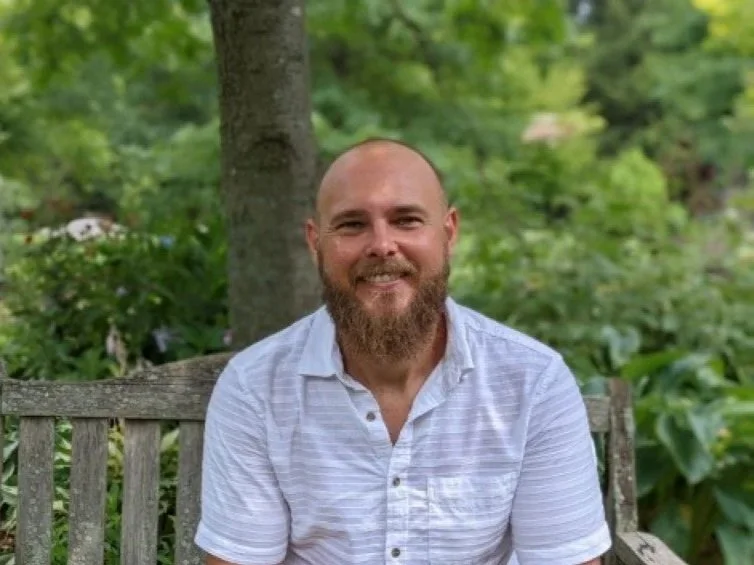
![A smiling man with a beard sitting on a wooden bench outdoors, with green trees and foliage in the background.]()
Carlin Palme, he/him
CLINICAL DIRECTOR
Registered Psychotherapist
Lead Psychedelic-Assisted Therapist -
![A young person with short dark hair, wearing a checkered shirt, sitting on a gray cushioned chair, smiling at the camera, with a green wall behind them.]()
Marion Roberts, they/she/he
Registered Social Worker
Psychedelic-Assisted Therapist -
![A man with long brown hair pulled back, wearing a black shirt with buttons, stands in front of an exposed brick wall.]()
Zach Cochrane, he/him
Registered Psychotherapist (Qualifying)
Psychedelic-Assisted Therapist -
![A woman with long dark wavy hair, smiling, wearing a white sweater, standing outdoors with green lush plants in the background.]()
Erin Saunders, she/her
THERAPY TEAM LEAD
Registered Psychotherapist
Psychedelic-Assisted Therapist -
![A woman with dark hair, glasses, and a maroon jacket, standing outdoors with a blurred wooded background, smiling.]()
Zavera Ghadially, sheher
Registered Psychotherapist
Psychedelic-Assisted Therapist




Submit a form.
If you're curious to learn more about PaT, complete this form.
We'll get back to you within 48 hours.
Psychedelic-Assisted Therapy
Frequently Asked Questions
-
Ketamine-assisted psychotherapy (KAP) is a form of PaT that uses ketamine, a legally approved medication in Canada, alongside therapy.
Unlike traditional talk therapy alone, KAP works with both the mind and brain—creating a temporary shift in perception and increasing neuroplasticity, which can help people access emotions, process difficult experiences, and form new perspectives more effectively.
-
Yes. Ketamine is a legal, approved medication in Canada and can be prescribed by qualified medical professionals. When used in a therapeutic setting alongside psychotherapy, it is considered an evidence-informed, off-label treatment.
-
Ketamine therapy works by increasing neuroplasticity (the brain’s ability to form new connections), reducing rigid thought patterns like rumination, and creating a state where emotions and memories may be more accessible.
In a therapeutic setting, this allows people to:
See their experiences from new perspectives
Access emotions that may feel blocked
Loosen deeply ingrained patterns
This is why therapy and integration are essential—ketamine opens the window, but the therapeutic process helps create lasting change.
-
Experiences vary, but many people report:
A sense of distance from usual thought patterns
Increased introspection or insight
Visual or sensory changes
A dreamlike or meditative state
Some sessions feel expansive, while others may bring up difficult emotions. Both can be valuable when supported properly. You remain aware throughout, and a trained therapist is there to guide you.
-
Many people notice a shift after one session. However, those effects often fade within a couple of weeks without continued support. We like to say “ketamine opens the door, integration therapy helps you walk through it” and often there are multiple doors to walk through for meaningful change to stick.
Lasting results typically come from a structured process that includes:
Preparation
Multiple ketamine sessions
Ongoing integration therapy
This allows changes to deepen and stabilize over time.
-
A single session can be meaningful and, for some people, clarifying. It can help you understand how you respond to the medicine and whether this approach feels right for you.
However, without continued therapy and additional sessions, the benefits are often temporary. PaT is most effective when approached as an ongoing therapeutic process. This is why PaT is prescribed as a treatment plan and not a singular dose.
Having one session with a therapist, osteopath, chiropractor, dentist, doctor etc. is rarely enough - ketamine-assisted therapy is no exception.
-
Ketamine has been used in medical settings for decades and has a strong safety profile when administered in a controlled, clinical environment. Unlike many anesthetics, it generally does not significantly suppress breathing at therapeutic doses, which contributes to its safety when used under proper medical supervision, including in ketamine-assisted therapy.
Safety depends on:
Thorough medical and psychological screening
Appropriate dosing and monitoring
Care from a trained clinical team
This is why preparation and assessment are essential parts of the process.
-
Ketamine therapy is not appropriate for everyone. It may not be recommended for individuals with:
A history of psychosis or certain psychiatric conditions
Certain cardiovascular or medical risks
Specific medication interactions
A comprehensive assessment helps determine whether this approach is safe and appropriate for you.
A “good” candidate is someone who’s tried other forms of treatment first (medications, therapy, etc) and is seeking a new option. This person is also aware that there is work to be done in psychedelic-assisted therapy because it’s not a magic pill.
-
Integration is the process of making sense of your experience and applying insights to your daily life.
Without integration, even powerful sessions can fade. With integration, people can:
Understand and process what arose during sessions
Turn insights into meaningful life changes
Reinforce new patterns and behaviours
This is where much of the long-term healing happens.
Ketamine helps open a door, therapy helps you walk through that door and choose a new pathway.
-
Some people experience noticeable shifts within hours or days after a session—especially with depression. This is significantly faster than many traditional antidepressants.
However, rapid improvement does not always mean lasting change. Ongoing therapy and integration are what help sustain those early gains.